European Migrant Smuggling Centre: 4th Annual Report

Early in 2020, the European Union’s (EU) Member States and partner countries in and outside the Schengen Area were struck by the COVID-19 pandemic. This crisis will have a lasting impact on our societies and economies. The same is true for the organised crime environment where not only cybercrime, fraud and organised property crime is thriving in the wake of this crisis, but the dynamics of migrant smuggling and human trafficking are changing too. To counter this threat, we have to use the great advantage of shared intelligence to target these types of international organised crime and Europol plays a key role.

DOWNLOAD THE REPORT

End Slavery Now

A Washington, DC-based nonprofit working to end modern slavery by developing a comprehensive platform for growing and advancing the anti-slavery movement. ESN’s tools integrate resources to allow members of the movement to efficiently coordinate their respective efforts to combat slavery, and allow information to be shared with, and resources directed toward, partners and other stakeholders.

Covid-19 and Supply Chains: Are we sacrificing standards at the moment they are needed most?

The impacts of Covid-19 are being felt throughout every tier of global supply chains. There are reports of factory shutdowns, order cancellations, workforce reductions and other disruptions. In turn, these have led to structural changes in supply chains, increased demand with tighter turnarounds and higher costs. Companies are now having to procure from new, unvetted suppliers, with potentially reduced staff and resourcing for due diligence.

Opportunity Knocks: Improving responses to labour exploitation with secure reporting

The research examines the practices and policies of labour inspectorates and the Metropolitan Police and their relationship with the Home Office’s Immigration Enforcement team. Findings are based on these agencies engagement with immigration enforcement action; frontline organisations’ experience supporting migrant workers; and cases of people who have insecure immigration status and have chosen not to report to statutory agencies as a result.

DOWNLOAD THE REPORT

Worker-Driven Social Responsibility: Exploring a New Model for Tackling Labour Abuse in Supply Chains

This scoping research explores ‘worker-driven social responsibility’ (WSR) as a tool for ensuring decent work in supply chains. WSR is an exciting new model for tackling labour abuse in supply chains that has demonstrably improved working conditions in a range of contexts. It is similar to collective bargaining in that it involves a group of workers jointly negotiating their rights, with the difference that it targets companies at the top of supply chains instead of direct employers. The report discusses why new models for addressing labour abuse in supply chains are needed and whether the WSR model could be suitable to the UK, especially to sectors where outsourcing is common.

DOWNLOAD THE REPORT

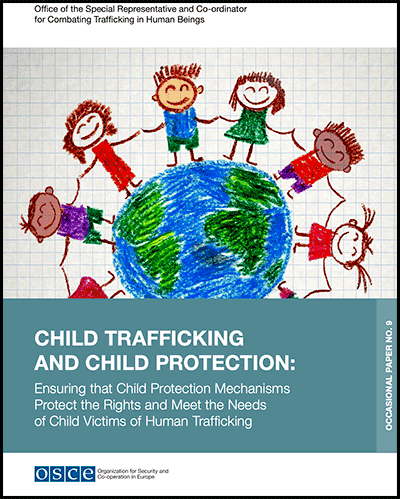
Child trafficking and child protection: Ensuring that Child Protection Mechanisms Protect the Rights and Meet the Needs of Child Victims of Human Trafficking

In light of the heightened vulnerability of children, combating trafficking in children has been at the forefront of the OSCE’s anti-trafficking agenda for many years. Since the adoption of the 2003 OSCE Action Plan to Combat Trafficking in Human Beings and its subsequent Addendum on Addressing the Special Needs of Child Victims of Trafficking for Protection and Assistance, there has been notable progress in delivering adequate and effective responses to trafficking in children in the OSCE area. However, anti-trafficking stakeholders continue to face substantial challenges to the practical implementation of their national laws and policies. A full alignment with the OSCE anti-trafficking commitments, in particular related to children, remains to be achieved.

READ THE REPORT

The Critical Role of Civil Society in Combating Trafficking in Human Beings

The purpose of this Occasional Paper is to outline and analyse the role played by civil society in efforts to address the threat posed by the crime of human trafficking. This paper is an additional tool to assist the OSCE participating States in strengthening their response to trafficking in human beings, especially in the area of partnerships as a fundamental component of an effective anti-trafficking response.

READ THE REPORT

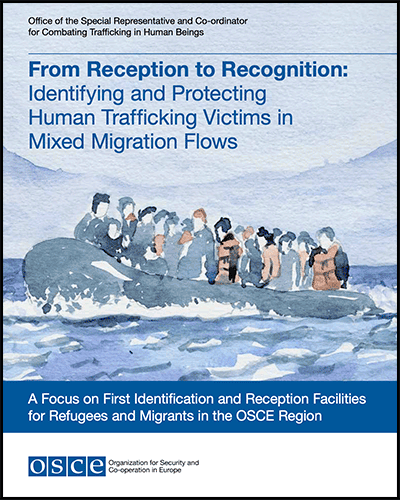
From Reception to Recognition: Identifying and Protecting Human Trafficking Victims in Mixed Migration Flows

The prolonged instability in the Middle-East, Sahel and North Africa has given rise to exceptional movements of migrants and refugees. Large mixed migratory flows have considerably affected receiving OSCE participating States, in particular countries along the Mediterranean and Balkan routes, making this essentially a European emergency. It is becoming increasingly evident that the current migration and refugee crisis creates a perfect market for the exploitation of migrants within transit and p destination countries by unscrupulous criminal syndi- cates and lone perpetrators.

READ THE REPORT

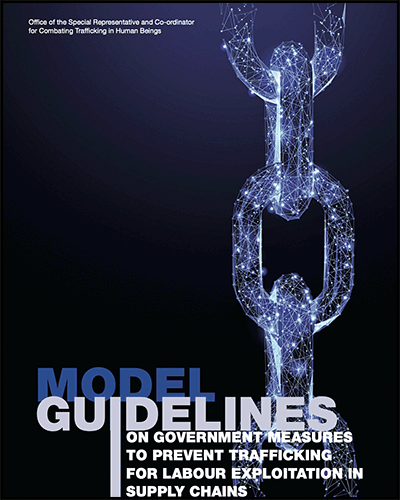
Model Guidelines on Government Measures to Prevent Trafficking for Labour Exploitation in Supply Chains

The aim of these model guidelines is to provide a practical tool to assist OSCE participating States and Partners for Cooperation to implement concrete measures to prevent trafficking in human beings in supply chains. It highlights how States can implement legislation and policies that promote transparency to ensure that public supply chains are free from trafficked labour; and promote the fair and ethical recruitment of workers.

READ THE REPORT

Sex In A Cold Climate (49:35)

Steve Humphries’ Sex in a Cold Climate , a documentary denouncing the Magdalene Asylums, which were operated by Catholic nuns in Ireland for over 100 years, caused an uproar when it was televised in England in March 1998 as part of Channel Four’s Witness series. An estimated three million people watched the documentary, one of the highest figures ever recorded for the series.

Compendium of relevant reference materials and resources on ethical sourcing and prevention of trafficking in human beings for labour exploitation in supply chains

The Compendium of Resources is divided into three sections. The first chapter includes State initiatives, such as laws, policies, national action plans, and guidelines developed by national authorities to address forced labour and human trafficking in supply chains. The second chapter looks at the work of NGOs, civil society, academia and the private sector regarding ethical sourcing and exploitation in supply chains. Finally, the third chapter reflects relevant initiatives of international organizations, including international treaties, political commitments, reports, publications, and others.

READ THE REPORT

The Dark Side Of Chocolate (46:31)

While we enjoy the sweet taste of chocolate, the reality is strikingly different for African children. In 2001 consumers around the world were outraged to discover that child labor and slavery, trafficking, and other abuses existed on cocoa farms in the Ivory Coast, a country that produces nearly half the world’s cocoa. An avalanche of negative publicity and consumer demands for answers and solutions soon followed.

OFFICIAL SITE

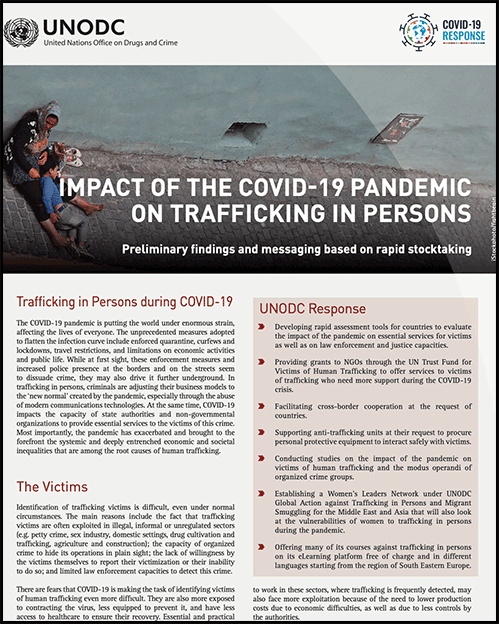
IMPACT OF THE COVID-19 PANDEMIC ON TRAFFICKING IN PERSONS: Preliminary findings and messaging based on rapid stocktaking

The COVID-19 pandemic is putting the world under enormous strain, affecting the lives of everyone. The unprecedented measures adopted to flatten the infection curve include enforced quarantine, curfews and lockdowns, travel restrictions, and limitations on economic activities and public life. While at first sight, these enforcement measures and increased police presence at the borders and on the streets seem to dissuade crime, they may also drive it further underground. In trafficking in persons, criminals are adjusting their business models to the ‘new normal’ created by the pandemic, especially through the abuse of modern communications technologies

READ THE REPORT

Not My Life NASCAR PSA

This PSA was created for the jumbo-tron at the Homestead-Miami Speedway. It will play 36 times during the upcoming NASCAR Ford Championship weekend. Large sporting events like this one attract human traffickers who sell young girls and women for sex. We are excited for the opportunity to spread awareness about this issue to NASCAR fans!

OFFICIAL SITE

NO WORKER LEFT BEHIND: PROTECTING VULNERABLE WORKERS FROM EXPLOITATION DURING AND AFTER THE CORONAVIRUS (COVID-19) PANDEMIC

This briefing examines the impact of the Coronavirus pandemic on the risk of labour exploitation in low-paid and insecure employment in the UK. Drawing on interviews with workers and frontline services, it proposes emergency measures to ensure all workers are protected against financial destitution and exploitation while the UK works to contain the virus and its impact.

DOWNLOAD THE REPORT

Not My Life (Trailer, 1:59)

A film about slavery in our time. A story about the way the world is. Not My Life is the first documentary film to depict the horrifying and dangerous practices of human trafficking and modern slavery on a global scale. Filmed on five continents over a period of four years, Not My Life unflinchingly, but with enormous dignity and compassion, depicts the unspeakable practices of a multi-billion dollar global industry whose profits, as the film’s narration says, “are built on the backs and in the beds of our planet’s youth.”

OFFICIAL SITE

The Emperor Has No Clothes: Garment Supply Chains in the Time of Pandemic

The COVID-19 pandemic is ravaging lives and livelihoods around the world – causing unprecedented socio-economic crises, massive displacement arising due to job losses, and at the same time, exposing the vulnerabilities of a highly globalised economy. As of April 9th, India has reported 5734 cases of COVID-19 while Indonesia has recorded 2956 cases, Sri Lanka 189 cases, and Cambodia 118 cases.

READ THE REPORT