Worker-Driven Social Responsibility: Exploring a New Model for Tackling Labour Abuse in Supply Chains

This scoping research explores ‘worker-driven social responsibility’ (WSR) as a tool for ensuring decent work in supply chains. WSR is an exciting new model for tackling labour abuse in supply chains that has demonstrably improved working conditions in a range of contexts. It is similar to collective bargaining in that it involves a group of workers jointly negotiating their rights, with the difference that it targets companies at the top of supply chains instead of direct employers. The report discusses why new models for addressing labour abuse in supply chains are needed and whether the WSR model could be suitable to the UK, especially to sectors where outsourcing is common.
DOWNLOAD THE REPORT

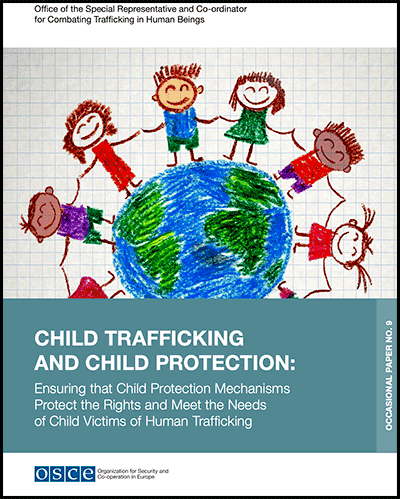
Child trafficking and child protection: Ensuring that Child Protection Mechanisms Protect the Rights and Meet the Needs of Child Victims of Human Trafficking

In light of the heightened vulnerability of children, combating trafficking in children has been at the forefront of the OSCE’s anti-trafficking agenda for many years. Since the adoption of the 2003 OSCE Action Plan to Combat Trafficking in Human Beings and its subsequent Addendum on Addressing the Special Needs of Child Victims of Trafficking for Protection and Assistance, there has been notable progress in delivering adequate and effective responses to trafficking in children in the OSCE area. However, anti-trafficking stakeholders continue to face substantial challenges to the practical implementation of their national laws and policies. A full alignment with the OSCE anti-trafficking commitments, in particular related to children, remains to be achieved.

READ THE REPORT

The Critical Role of Civil Society in Combating Trafficking in Human Beings

The purpose of this Occasional Paper is to outline and analyse the role played by civil society in efforts to address the threat posed by the crime of human trafficking. This paper is an additional tool to assist the OSCE participating States in strengthening their response to trafficking in human beings, especially in the area of partnerships as a fundamental component of an effective anti-trafficking response.

READ THE REPORT

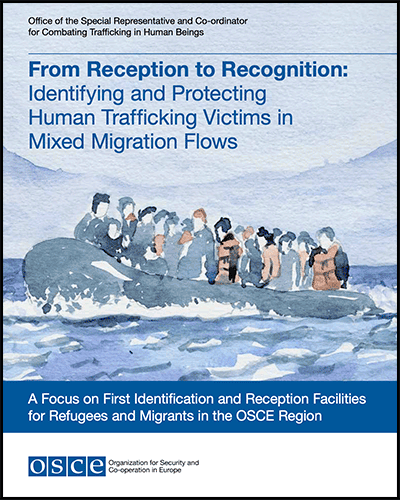
From Reception to Recognition: Identifying and Protecting Human Trafficking Victims in Mixed Migration Flows

The prolonged instability in the Middle-East, Sahel and North Africa has given rise to exceptional movements of migrants and refugees. Large mixed migratory flows have considerably affected receiving OSCE participating States, in particular countries along the Mediterranean and Balkan routes, making this essentially a European emergency. It is becoming increasingly evident that the current migration and refugee crisis creates a perfect market for the exploitation of migrants within transit and p destination countries by unscrupulous criminal syndi- cates and lone perpetrators.

READ THE REPORT

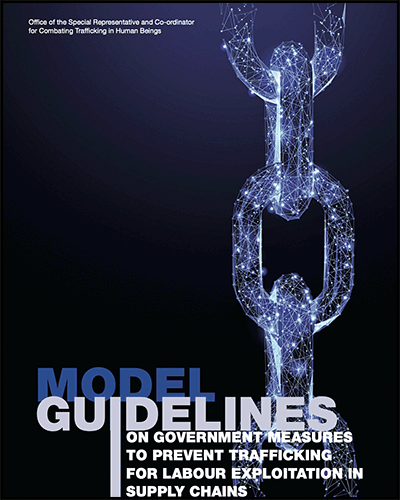
Model Guidelines on Government Measures to Prevent Trafficking for Labour Exploitation in Supply Chains

The aim of these model guidelines is to provide a practical tool to assist OSCE participating States and Partners for Cooperation to implement concrete measures to prevent trafficking in human beings in supply chains. It highlights how States can implement legislation and policies that promote transparency to ensure that public supply chains are free from trafficked labour; and promote the fair and ethical recruitment of workers.

READ THE REPORT