FACT SHEET: Human Trafficking & Forced Labor in For-Profit Detention Facilities

Congress passed the Trafficking Victims Protection Act of 2000 (TVPA) to inject “new potency in the Thirteenth Amendment’s guarantee of freedom: whether on farms or sweatshops, in domestic service or forced prostitution.” Federal criminal law has long recognized forced labor under threat of criminal sanction as a form of involuntary servitude. In 2003 Congress added a powerful enforcement mechanism: a private right of action permitting victims to hold their traffickers accountable.

READ THE REPORT

COVID-19 and the Right to be Human

The great pandemic of 2020 has pushed the human rights regime into a brand-new dominion. The challenges for state leaders and activists alike will be, for the foreseeable future, continually linked to activities of other countries; their ability to suppress infection rates, and successful mechanisms for protecting populations from illness or death.

Hidden in Plain Sight: An inquiry into Establishing a Modern Slavery Act in Australia

Modern slavery is often ‘hidden in plain sight’. These heinous crimes are present across a range of industries in Australia and in the global supply chains of businesses and organisations operating here. Latest estimates suggest that over 40 million people around the world, and 4 300 in Australia, are victims of some form of modern slavery, which includes human trafficking, slavery, debt bondage, forced labour and other slavery-like practices.

READ THE REPORT

Independent Anti-Slavery Commissioner Annual Report 2019-2020

From Dame Sara Thornton – Independent Anti-Slavery Commissioner: The Modern Slavery Act (2015) sets out my role to encourage good practice across the UK and in my strategic plan which was laid before parliament in October 2019 I set out how I planned to do that. This report is structured around the four priorities in the strategic plan and details my activities, and those of my small team, over eleven months from my appointment in May 2019.

READ THE REPORT

National Center for Missing & Exploited Children

The leading nonprofit organization in the U.S. working with law enforcement, families and the professionals who serve them on issues related to missing and sexually exploited children. As part of its Congressional authorization, NCMEC has created a unique public and private partnership to build a coordinated, national response to the problem of missing and sexually exploited children, establish a missing children hotline and serve as the national clearinghouse for information related to these issues.

COVID-19 and a Path Forward for Homeworkers

Due to COVID-19 and subsequent shelter-in-place guidelines, working from home is the new routine for many professionals. That being said, homeworking has been the norm for millions of people in global supply chains for many years. This article provides a brief overview of homeworking and its role in the global economy, describes some its most salient risks of modern slavery, and outlines the impact of COVID-19 on this population.

Impact of the coronavirus disease pandemic on contemporary forms of slavery and slavery-like practices: Report of the Special Rapporteur on contemporary forms of slavery, including its causes and consequences

Tomoya Obokata was appointed as Special Rapporteur on contemporary forms of slavery, including its causes and consequences, by the Human Rights Council in March 2020. He assumed his functions on 1 May 2020. The present report is his first report to the Council. The present report contains reflections on and analysis of the impact that coronavirus disease (COVID-19) has had on contemporary forms of slavery and slavery-like practices, and recommendations on how various stakeholders could mitigate the impact of the pandemic. It also contains an overview of the methods of work that the new Special Rapporteur on contemporary forms of slavery, including its causes and consequences, intends to implement and promote during his tenure.

READ THE REPORT

“I wish I would never have to wake up again”: Material conditions and psychological well-being of Bangladeshi women garment workers in Jordan

In 2018-2019, the International Secretariat of the Global Alliance Against Traffic in Women (GAATW- IS), in collaboration with eleven organisations across nine countries in Asia carried out a Feminist Participatory Action Research (FPAR) focusing on ‘Safe and Fair Migration: A feminist perspective on women’s rights to mobility and work’. In our study, FPAR is used as a framework and approach to capturing women migrants’ complex realities and perspectives on labor and migration. What distinguishes FPAR from conventional research is that it is deliberately women-centered and participant driven, the knowledge comes from the women (community) and owned by them, and based on their lived experiences, the research participants propose solutions so the research results become a tool to collectively organize advocacy actions.

READ THE REPORT

Restore NYC

Mission is to end sex trafficking in New York and restore the well-being and independence of foreign-national survivors. Working to this end, they deliver complete care, addressing physical, emotional and spiritual needs; provide community and safe, long-term housing; empower survivors when they cooperate with law enforcement; increase awareness and understanding in the greater community, and, advocate for effective policies and legislation.

COVID-19 and Human Trafficking: Invisible Victims

The COVID-19 pandemic intensifies inequality in the world affecting the most vulnerable individuals in our populations. Even before the pandemic human trafficking victims faced isolation, lack of freedom of movement and of access to assistance and information. The spread of COVID-19 and the following crisis made them even more invisible to the world in a time when they need more help than ever.

Child Wise

Child Wise is dedicated to protecting children from abuse and exploitation in Australia and overseas by providing direct counselling, advice and support; raising awareness and educating individuals and communities through education campaigns and trainings; building the capacity of individuals and communities to protect children; researching and responding to new risks to children eg. the Internet; and reducing the impact of child abuse and exploitation through counselling and other recovery program

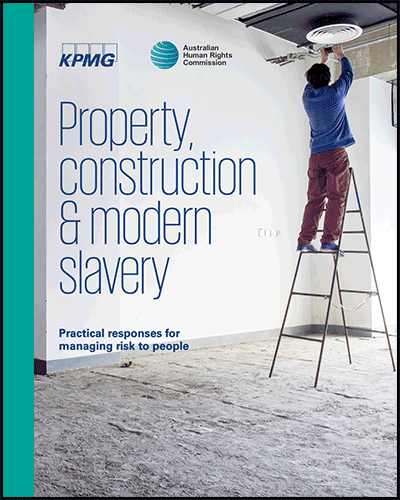
Property, Construction & Modern Slavery: Practical responses for managing risk to people

A practical guide to: highlight particular modern slavery risks prevalent in the property and construction sector; provide tips for the property and construction sector on leading practice and a rights-based approach to managing modern slavery risk; and, foster transparent modern slavery reporting for the benefit of business, government and the people at risk of harm.

READ THE REPORT

Potato slaves: The cost of an H-2A visa in Texas

Workers at a potato processing plant in Texas face abuse by their employers but choose to stay silent out of fear of losing their H-2A visas. Most are unaware they’re even victims of forced labor, or that the fees they’re required to pay to their supervisors for a visa are illegal. They don’t trust the authorities either, and fear retaliation for speaking out. It’s a reality faced by some 36,000 people a year in this border state.

READ THE REPORT

COVID-19: CHILD SEXUAL EXPLOITATION

The global impact of COVID-19 means people are spending more time online. This includes both children and adults. Adults working remotely are less able to spend time with their children, who are allowed greater unsupervised internet access. As a result, children are: more exposed to offenders through online gaming, the use of chat groups in apps, phishing attempts via email, unsolicited contact in social media and through less secure online educational applications; more inclined towards making explicit material to exchange with peers, eventually reaching child sex offenders; in some cases, becoming lonely and isolated, which offenders try to benefit from, connecting with them to produce explicit material or to arrange a meeting in real life.

READ THE REPORT

A typology of child trafficking in Albania

This report aims to better understand how Albania’s child protection system works as it relates to potential victims of child trafficking. It is based on the detailed data from 45 cases reported by the Child Protection Units from eleven municipalities across Albania. The cases were selected from those collected by the State Agency for the Rights and Protection of the Child in the framework of the support provided by the OSCE Presence in Albania because they demonstrate strong evidence of child trafficking.

READ THE REPORT