The Freedom Fund Annual Impact Report 2016

More organisations are joining the anti-slavery movement, and forward-looking businesses are beginning to seriously tackle the risks of slavery in their supply chains. But so much more remains to be done, with an estimated 46 million people still enslaved and exploited around the world. At the Freedom Fund, our focus has been on dismantling the local and national systems that enable slavery in countries with the heaviest burden of this crime.

READ THE REPORT

Forced Labor Action Compared: Findings From Three Sectors

Last year, KnowTheChain identified three sectors with the highest risk of forced labor in their supply chains and benchmarked 60 companies within those sectors. It was the first analysis of its kind, focusing specifically on forced labor risks and the corporate policies and practices developed by companies in response. In order to build on the momentum of this first set of reports, KnowTheChain worked to identify lessons and recommendations that can benefit companies across all sectors. This report is the product of those efforts.

READ THE REPORT

The Typology of Modern Slavery: Defining Sex and Labor Trafficking in the United States

Polaris analyzed more than 32,000 cases of human trafficking documented between December 2007 and December 2016 through its operation of the National Human Trafficking Hotline and BeFree Textline. This is the largest data set on human trafficking in the United States ever compiled and publically analyzed. The Typology of Modern Slavery offers a map for taking the next steps in creating a world without slavery.

READ THE REPORT

The Modern Day Slavery Survey 2017 Report

The Modern Day Slavery Survey 2017 was designed to shed light on the working practices of supply chain and procurement professionals in their attempts to comply with the Modern Slavery Act 2015. Since the introduction of the Act in 2015, anecdotal evidence from UK businesses has given a glimpse into the dif cult situation procurement, supply chain and HSE teams have been placed into, to ensure they are complying with this new legislation. This report on Modern Day Slavery proves where businesses are currently failing and what they anticipate to do to ensure full compliance in the future.

LINK TO FORM TO DOWNLOAD THE REPORT

2016 Freedom From Slavery Forum Report

The Freedom from Slavery Forum was designed to provide a place for leaders of the global anti-human trafficking and anti-slavery movement to come together, share and discuss best practices and lessons learned, identify gaps in the field, brainstorm new ideas, and build relationships with one another. Additionally, the Forum is meant to educate the public about this issue. Accordingly, the 2016 Forum was a two day event comprised of private meetings among anti-slavery experts, followed by a public panel discussion on the ways the electronics and fishing industries deal with issues of slavery and trafficking in their supply chains.

READ THE REPORT

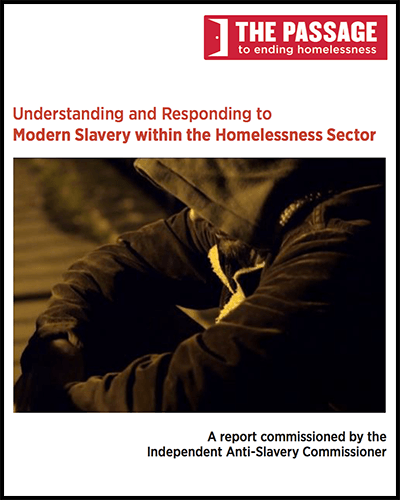
Understanding and Responding to Modern Slavery within the Homelessness Sector

Homelessness organisations and anti-slavery organisations have both been aware of links between modern slavery and homelessness, yet there has been little research into how these issues overlap and impact on one another. An initial scoping exercise was, therefore, commissioned in 2016 by the UK’s Independent Anti-Slavery Commissioner, Kevin Hyland OBE, to gain a better understanding of modern slavery within the homelessness sector. The Passage, a leading homelessness charity, was appointed to look into this issue.

READ THE REPORT

“IF I COULD GO TO SCHOOL…”

Girl soldiers in Democratic Republic of Congo (DRC) experience severe hardships – both in the ranks of armed groups and after returning home. Programmes that support the release, recovery and reintegration of girl soldiers have so far been woefully inadequate. Only a small percentage of girls leave armed groups through formal demobilisation processes, and an even smaller number receive any assistance. Following extensive consultations with DRC-based child protection partners in 2012-2015, Child Soldiers International travelled to eastern DRC in early 2016. We conducted interviews with 150 former girl soldiers, and spoke to community and child protection representatives. Our ?ndings will form a set of best practice principles to improve assistance to former child soldiers, with a particular focus on the speci?c needs of girls.

READ THE REPORT

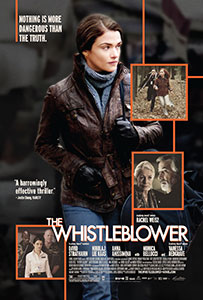
“The Whistleblower” (Trailer, 2:00)

Inspired by actual events, Kathy (Academy Award® winner Rachel Weisz) is an American police officer who takes a job working as a peacekeeper in post-war Bosnia. Her expectations of helping to rebuild a devastated country are dashed when she uncovers a dangerous reality of corruption, cover-up and intrigue amid a world of private contractors and multinational diplomatic doubletalk.

Financing Forced Labor

Sixty years have passed since the adoption of ILO Convention No. 105 (Abolition of Forced Labor Convention, 1957), yet a number of States have persisted in using forced labor for economic development, the eradication of which was a driving force behind establishing the Convention. Nowhere in the world is this problem more entrenched and pervasive than Uzbekistan.

READ THE REPORT

“Trade” (Trailer, 2:16)

Adriana (Paulina Gaitan) is a 13-year-old girl from Mexico City whose kidnapping by sex traffickers sets in motion a desperate mission by her 17-year-old brother Jorge (Cesar Ramos) to save her. Trapped and terrified by an underground network of international thugs who earn millions exploiting their human cargo, Adriana’s only friend and protector throughout her ordeal is Veronica (Alicja Bachleda), a young Polish woman tricked into the trade by the same criminal gang. As Jorge dodges immigration officers and incredible obstacles to track the girls’ abductors|he meets Ray (Kevin Kline), a Texas cop whose own family loss to sex trafficking leads him to become an ally in the boy’s quest.

Human Trafficking and Public Corruption

Corruption is an endemic feature of human trafficking. It is common to both sex and labour trafficking. Corruption enables traffickers’ often-successful efforts to evade justice. Examples abound: a police officer demands a bribe to ignore the presence of a child in a brothel; an immigration official receives payment to provide a forged passport; a judge dismisses a trafficking case in exchange for a share of the traffickers’ profits; a law enforcement official deports a trafficking victim to prevent her testimony against a criminal defendant; a government official accepts a bribe to fraudulently provide residency permits for foreign workers.

READ THE REPORT