
Every 15 Seconds: Matt Friedman at TEDxSanJoaquin (16:45)
Matt Friedman reflects upon the breadth and range of human slavery in the world today and how we can all play our part in helping to address this global problem.

Matt Friedman reflects upon the breadth and range of human slavery in the world today and how we can all play our part in helping to address this global problem.
Theresa’s passionate advocacy for one of the most vulnerable segments of our society is inspired by her own horrifying experience. As she introduces you to a world far beyond your mind’s reach, she’ll show it can really be found next door. And how one answer to it all might be found in a tiny bar of soap.
Rachael Lloyd is an anti human-trafficking advocate. She is the founder and Executive Director of the New York-based Girls Educational and Mentoring Services (GEMS). Since immigrating to the United States, Rachel has worked with incarcerated women, as well as combatting commercial sexual exploitation of children and young women within the United States. GEMS is the only organization in New York State of its kind.

The food and beverage industry is an at-risk sector. Forced labor occurs both in the production of raw materials and during the food processing stages of food and beverage companies’ supply chains. Food commodities are produced by agricultural workers who often come from vulnerable groups such as women, international migrants, and internal migrants with little education. Weak labor laws and law enforcement in the sector, together with isolated workplaces where housing tends to be provided by the employer, aggravate the typically poor working conditions and can leave workers vulnerable and dependent on their employer.

Workshop Participants considered that the role of the Security Council will need to vary, depending on the nature of the human trafficking activity. In some cases, it may be direct and disruptive. In others it may be more normative, or may involve shaping the UN’s field response. In each of these areas, the Security Council can also take action to encourage and support other actors – Member States, regional organizations, the private sector-to pay attention to and address human trafficking in conflict.

This year’s Report places a special emphasis on human traf cking in the global marketplace. It highlights the hidden risks that workers may encounter when seeking employment and the steps that governments and businesses can take to prevent trafficking, including a demand for transparency in global supply chains.

Miles de mujeres latinas o hispanas son prisioneras de la industria de la trata sexual en bares y establecimientos tipo cantina a lo largo de los Estados Unidos. Son reclutadas y controladas por redes criminales, propietarios de negocios o tratantes independientes. Las engañan y seducen con promesas de relaciones románticas, buenos empleos y cruce seguro por la frontera hasta los Estados Unidos. Otras mujeres y niñas se ven forzadas a vender sexo por sus padres, familiares o parejas sentimentales.

Based on data from the National Human Trafficking Resource Center (NHTRC) hotline and Polaris’s BeFree Textline, More than Drinks for Sale sheds light on the unseen realities faced by young women and girls from Latin America who are trapped in an underground sex economy operating out of cantinas and bars across the U.S. – and why their traffickers remain largely untouched.

Child labour is defined as work that deprives children of their childhood and the opportunity to attend school, and that is harmful to their physical and mental development. Forced labour all work or service which is exacted from any person under the menace of any penalty and for which the worker does not offer himself or herself voluntarily.
Anti-Slavery International is the only UK-based charity exclusively working to eliminate all forms of slavery and slavery like practices throughout the world.
Drawing on CRS Report R42497, Trafficking in Persons: International Dimensions and Foreign Policy Issues for Congress, this report reflects policy activity in the 114th Congress and will be updated to reflect international trafficking developments through the end of the second session.

This report is based on research conducted in Oman in May 2015 by two Human Rights Watch researchers. They conducted interviews in Muscat, the Omani capital, and Seeb, a nearby coastal city, which have high concentrations of recruitment agencies and families employing domestic workers, and where many domestic workers fled after abuse by employers from other parts of Oman.

The Modern Slavery Act 2015 requires commercial organisations operating in the UK and with an annual turnover above £36m to produce a statement setting out the steps they are taking to address and prevent the risk of modern slavery in their operations and supply chains.

Companies who opt for a model of secrecy will find they are no longer viable, as NGOs, journalists and consumers are increasingly able to hold them to account. Instead, those who lead the way with transparent, ethical and slavery-free supply chains will become the companies of choice and the new market leaders.
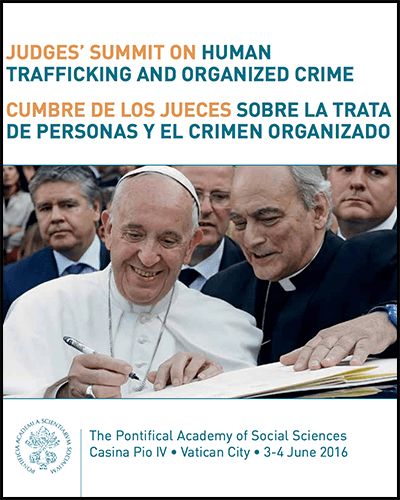
We would like to hear from judges how they deal with the issues of sex trafficking, slave labour, organ trade, drug trafficking and organised crime; how their own judicial systems could better incorporate our humanitarian values; and how capacity-building could enhance Judges’ appreciation of the needs of victims and not merely the penalization of traffickers.
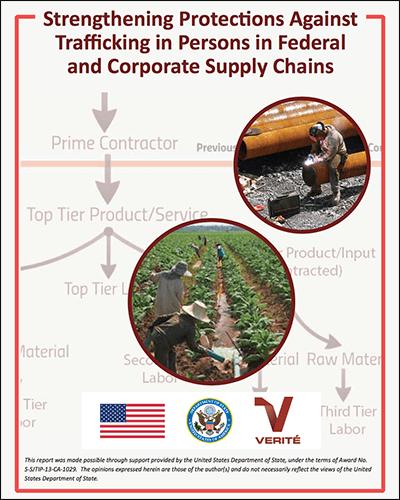
The EO requires prime contractors providing large overseas contracts to develop and maintain detailed anti-trafficking compliance programs and provide annual certification of their anti- trafficking efforts.
To assist United States Government agencies and the federal contracting community to prepare for implementation of the EO and new FAR rules, the United States Department of State’s Office to Monitor and Combat Trafficking in Persons (DOS/J/TIP) asked Verité to investigate and map out the risk of trafficking in global supply chains generally, and in federal supply chains in particular.

Slavery is abhorrent, more rampant than at any time in history, and entirely avoidable. Unlike major world epidemics such as malaria and HIV/AIDS, slavery is a human condition of our own making. While that in itself is a tragedy, it also means that we have the power to end it. And end slavery we must; we cannot allow future generations to fall prey to this hideous practice.

The aim of this handbook is to raise awareness of how host states can regulate and monitor the employment conditions of private domestic workers in diplomatic households. It highlights how protocol departments and similar authorities can prevent exploitation or abuse and what can be done if it occurs.

In conjunction with dedicated members of the Texas Legislature, the Task Force has helped Texas become and remain a leader in anti-trafficking efforts. Shared Hope International, a leading anti-trafficking organization, awarded Texas some of the highest rankings in the nation in 2013 and 2014 in its annual Protected Innocence Challenge. Texas received perfect scores for its efforts to criminalize domestic minor sex trafficking and provide criminal justice tools for investigation and prosecution of trafficking cases. Additionally, the state received near perfect scores for its work related to criminal provisions addressing demand and criminal provisions for traffickers.
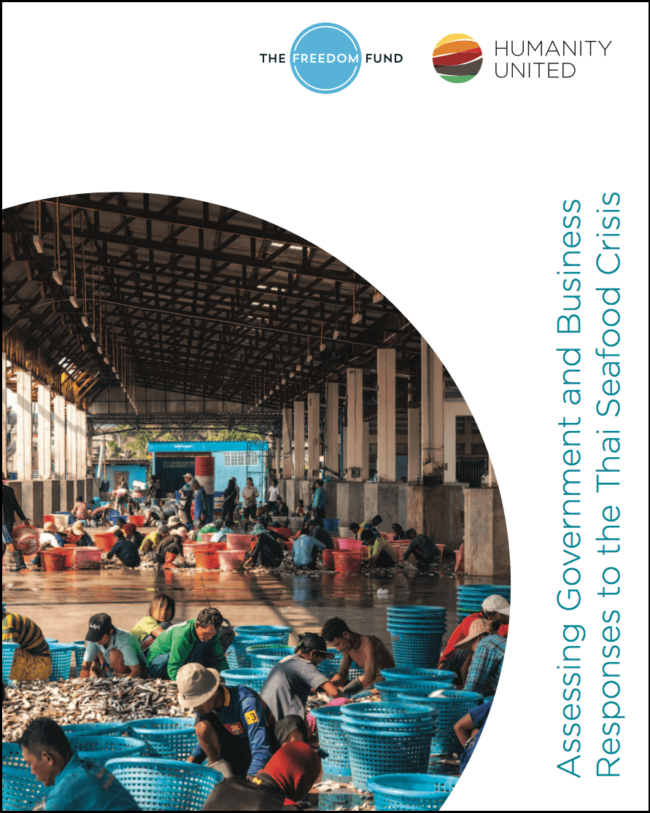
International focus on the Thai seafood industry has rapidly increased in recent years. The last two years in particular have seen a series of high profile reports that have damaged the industry’s reputation and put pressure on the Thai government. In June 2014, a six-month investigation by the Guardian newspaper culminated in an exposé linking one of Thailand’s largest companies and a number of leading American and European retailers to sh caught by slaves, which was used to feed the farmed shrimp they sold in the US and EU.

This year’s Report underscores the need for increased attention to preventing human trafficking. It encourages governments to identify and acknowledge those most at-risk in society, and to create effective ways to recognize vulnerable populations and help first responders spot the methods used by human traffickers. By understanding the needs of vulnerable groups, governments can partner with NGOs and the private sector to protect the innocent from would-be traffickers.

This Europol product is descriptive and oriented towards explaining the current crime situation providing an overview of all relevant factors (OCGs, criminal markets, and geographical dimension).
Aimed at experts and intended to help inspire and strengthen the policy and practice to address trafficking in human beings (THB) for labour exploitation of all organisations that could come across it. More specifically, it aims to stimulate multidisciplinary and cross-border cooperation and a comprehensive approach against this phenomenon. Expertise and ideas from experts from all Member States were collected as input for the manual. It contains knowledge and expertise on THB for labour exploitation from all over the European Union.

Introduces the key findings of a quantitative study of youth-produced sexual content online. The Study took place over a three month period between September and November 2014 and used a combination of proactively sourced content from search engines, historic IWF data and leads from public reports to locate “youth-produced sexual content” depicting “young people”.

Discussion paper about the lack of recognition of the commercial sexual exploitation of boys in the United States, identifying challenges and recommendations.

Document is focused on identifying and serving minor sex trafficking victims and describing the options for residential and rehabilitative programs for minor victims of sex trafficking in the United States.

