UNODC Global Report on Trafficking in Persons 2016

Since the last Global Report on Trafficking in Persons in 2014 there have been a number of significant develop- ments that reinforce this report’s importance, and place it at the heart of international efforts undertaken to combat human trafficking. Perhaps the most worrying develop- ment is that the movement of refugees and migrants, the largest seen since World War II, has arguably intensified since 2014.

READ THE REPORT

Developing Freedom: The Sustainable Development Case for Ending Modern Slavery, Forced Labour and Human Trafficking: SYNOPSIS

40.3 million people – around 1 in every 185 people alive – experienced modern slavery or forced labour in 2016. Ending modern slavery is central to several targets of the UN Sustainable Development Goals (SDGs), notably Target 8.7. Yet, development sector voices are often notable for their absence from global anti-slavery and anti-trafficking discussions. This study considers a simple question: how can fighting slavery contribute to sustainable development? Over eighteen months, we used comprehensive literature reviews and mapping, quantitative analysis, surveys and mixed methods case studies.

READ THE REPORT

Developing Freedom: The Sustainable Development Case for Ending Modern Slavery, Forced Labour and Human Trafficking: KEY FINDINGS

There were an estimated 40.3 million people in modern slavery in 2016 – 1 in every 185 people. Modern slavery involves some people treating others as if they own them. This involves intentional denial or restriction of victims’ economic agency, even as survivors assert agency in other ways. When one person enslaves another, they prevent them exercising outside labour options, and may control consumption, savings and investment choices. This control can be used to extract a rent, by coercing the victim to work below market wage. Sustainable development and human development have focused on developing people’s capabilities but have assumed people control their own economic agency. That is not always so. Addressing slavery requires a different way of thinking, that seeks to protect and maximize agency.

READ THE REPORT

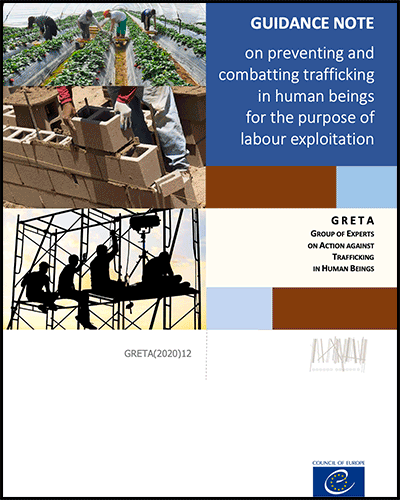
GUIDANCE NOTE on preventing and combatting trafficking in human beings for the purpose of labour exploitation

At its 35th meeting in July 2019, GRETA decided to set up an ad hoc working group on strength- ening action to combat trafficking for the purpose of labour exploitation, which drafted a compendium of good practices in the area of combating trafficking in human beings for the purpose of labour exploitation. On the basis of the compendium, GRETA has adopted this Guidance Note to further strengthen the implementation of the obligation to take measures to prevent and combat trafficking for the purpose of labour exploitation.

READ THE REPORT

Strength in numbers: case studies from Southeast Asia

The case studies in this report document the experiences of anti-trafficking organizations that work on the frontlines in Thailand, Malaysia, Cambodia, and Vietnam and illustrate Freedom Collaborative’s impact on their activities. The four partners featured were chosen as inspiring examples of organizations that provide critical services directly to vulnerable communities, and also for their efforts in promoting the case for collaborating with other groups.

READ THE REPORT

Australia’s National Action Plan to Combat Modern Slavery 2020–25

The National Action Plan sets the strategic direction of our work to combat modern slavery in Australia over the next five years. Modern slavery is a devastating crime that exploits the most vulnerable in our communities. It is a crime that sees women, men and children deprived of their freedom and robbed of their rights. Modern slavery also taints the global supply chains of the goods and services we purchase everyday. The United Nations estimates that over 40 million people are trapped in modern slavery, including 16 million in private sector supply chains. Australia is not immune. There were an estimated 1,900 victims and survivors of modern slavery between 2015 and 2017 alone, with 83 per cent being women and girls. Modern slavery has no place in our society. This is why we have been relentless in our opposition to these grave violations of human rights through implementing a strong program of initiatives to combat modern slavery in Australia and abroad.

READ THE REPORT

Design for Freedom

Global laws forbid the use of slave labor in the built environment, yet our buildings, and the materials that go into our buildings, are heavily reliant on slave labor. Most industry professionals are familiar with the once legal transatlantic slave trade of the previous centuries. Though slavery is now illegal in every country, it persists in various forms, from human trafficking to forced labor. This report defines aspects of modern slavery and the scope of the problem, and presents compelling reasons why we should care about the systemic use of forced labor in the building materials supply chain, including growing legal and reputational risks.

READ THE REPORT

FACT SHEET: Human Trafficking & Forced Labor in For-Profit Detention Facilities

Congress passed the Trafficking Victims Protection Act of 2000 (TVPA) to inject “new potency in the Thirteenth Amendment’s guarantee of freedom: whether on farms or sweatshops, in domestic service or forced prostitution.” Federal criminal law has long recognized forced labor under threat of criminal sanction as a form of involuntary servitude. In 2003 Congress added a powerful enforcement mechanism: a private right of action permitting victims to hold their traffickers accountable.

READ THE REPORT

Hidden in Plain Sight: An inquiry into Establishing a Modern Slavery Act in Australia

Modern slavery is often ‘hidden in plain sight’. These heinous crimes are present across a range of industries in Australia and in the global supply chains of businesses and organisations operating here. Latest estimates suggest that over 40 million people around the world, and 4 300 in Australia, are victims of some form of modern slavery, which includes human trafficking, slavery, debt bondage, forced labour and other slavery-like practices.

READ THE REPORT

Independent Anti-Slavery Commissioner Annual Report 2019-2020

From Dame Sara Thornton – Independent Anti-Slavery Commissioner: The Modern Slavery Act (2015) sets out my role to encourage good practice across the UK and in my strategic plan which was laid before parliament in October 2019 I set out how I planned to do that. This report is structured around the four priorities in the strategic plan and details my activities, and those of my small team, over eleven months from my appointment in May 2019.

READ THE REPORT

Impact of the coronavirus disease pandemic on contemporary forms of slavery and slavery-like practices: Report of the Special Rapporteur on contemporary forms of slavery, including its causes and consequences

Tomoya Obokata was appointed as Special Rapporteur on contemporary forms of slavery, including its causes and consequences, by the Human Rights Council in March 2020. He assumed his functions on 1 May 2020. The present report is his first report to the Council. The present report contains reflections on and analysis of the impact that coronavirus disease (COVID-19) has had on contemporary forms of slavery and slavery-like practices, and recommendations on how various stakeholders could mitigate the impact of the pandemic. It also contains an overview of the methods of work that the new Special Rapporteur on contemporary forms of slavery, including its causes and consequences, intends to implement and promote during his tenure.

READ THE REPORT

“I wish I would never have to wake up again”: Material conditions and psychological well-being of Bangladeshi women garment workers in Jordan

In 2018-2019, the International Secretariat of the Global Alliance Against Traffic in Women (GAATW- IS), in collaboration with eleven organisations across nine countries in Asia carried out a Feminist Participatory Action Research (FPAR) focusing on ‘Safe and Fair Migration: A feminist perspective on women’s rights to mobility and work’. In our study, FPAR is used as a framework and approach to capturing women migrants’ complex realities and perspectives on labor and migration. What distinguishes FPAR from conventional research is that it is deliberately women-centered and participant driven, the knowledge comes from the women (community) and owned by them, and based on their lived experiences, the research participants propose solutions so the research results become a tool to collectively organize advocacy actions.

READ THE REPORT

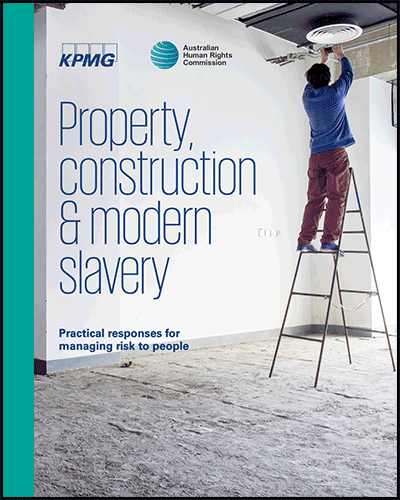
Property, Construction & Modern Slavery: Practical responses for managing risk to people

A practical guide to: highlight particular modern slavery risks prevalent in the property and construction sector; provide tips for the property and construction sector on leading practice and a rights-based approach to managing modern slavery risk; and, foster transparent modern slavery reporting for the benefit of business, government and the people at risk of harm.

READ THE REPORT

Potato slaves: The cost of an H-2A visa in Texas

Workers at a potato processing plant in Texas face abuse by their employers but choose to stay silent out of fear of losing their H-2A visas. Most are unaware they’re even victims of forced labor, or that the fees they’re required to pay to their supervisors for a visa are illegal. They don’t trust the authorities either, and fear retaliation for speaking out. It’s a reality faced by some 36,000 people a year in this border state.

READ THE REPORT

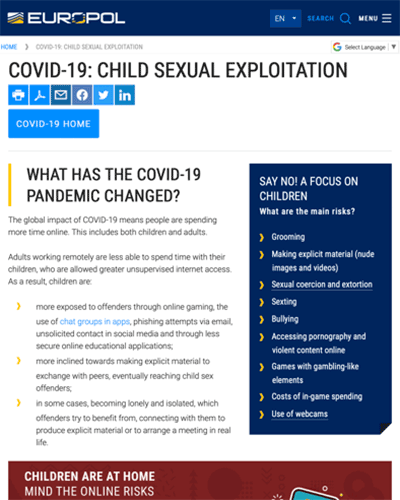
COVID-19: CHILD SEXUAL EXPLOITATION

The global impact of COVID-19 means people are spending more time online. This includes both children and adults. Adults working remotely are less able to spend time with their children, who are allowed greater unsupervised internet access. As a result, children are: more exposed to offenders through online gaming, the use of chat groups in apps, phishing attempts via email, unsolicited contact in social media and through less secure online educational applications; more inclined towards making explicit material to exchange with peers, eventually reaching child sex offenders; in some cases, becoming lonely and isolated, which offenders try to benefit from, connecting with them to produce explicit material or to arrange a meeting in real life.

READ THE REPORT

A typology of child trafficking in Albania

This report aims to better understand how Albania’s child protection system works as it relates to potential victims of child trafficking. It is based on the detailed data from 45 cases reported by the Child Protection Units from eleven municipalities across Albania. The cases were selected from those collected by the State Agency for the Rights and Protection of the Child in the framework of the support provided by the OSCE Presence in Albania because they demonstrate strong evidence of child trafficking.

READ THE REPORT

U.S. Department of State Trafficking in Persons (TIP) Report 2019

This year, the TIP Report introduction highlights human trafficking that takes place exclusively within the borders of one country, absent any transnational elements. Although acknowledging human trafficking in this form is not new or novel, it remains important. The ILO reports that, globally, traffickers exploit 77 percent of victims in their countries of residence. Far too often, individuals, organizations, and governments erroneously use definitions of trafficking in persons that require the movement of victims.

READ THE REPORT

Beyond Voluntarism: Human rights and the developing international legal obligations of companies

Interest is growing in the responsibility of private companies to respect human rights. What was once a marginal issue is now a major concern of companies, as well as governments, intergovernmental and non- governmental organisations, investors and consumers. In July 2000 the UN Secretary-General, Kofi Annan, launched the Global Compact, a UN- sponsored appeal which called on companies to commit themselves to respect nine core principles in relation to human rights, labour and the environment. Hundreds of companies, including many of the world’s largest, have joined this initiative.

READ THE REPORT

Labor and Sex Trafficking Among Homeless Youth

Human trafficking—the exploitation of a person’s labor through force, fraud, or coercion—is a crime whose victims tend to be society’s most vulnerable. People who are homeless, lack a support system, or are desperate for work are susceptible to the promises of people who would exploit them for labor and for sex. Recently, homeless youth providers in the United States and Canada have become aware that their clients are particularly at risk of trafficking and research has begun to uncover the extent and contours of the problem within that community.

READ THE REPORT

U.S. Department of State Trafficking in Persons (TIP) Report 2020

For 20 years, the Trafficking in Persons Report (TIP Report) has demonstrated the United States’ conviction that human trafficking is a global threat necessitating a global response. Traffickers are denying nearly 25 million people their fundamental right to freedom, forcing them to live enslaved and toil for their exploiter’s profit. This report arms governments with the data they need to increase the prosecution of traffickers, provide victim-centered and trauma-informed protection for victims of trafficking, and prevent this crime altogether.

READ THE REPORT

Implementing the Modern Slavery Act 2018: The Australian Government’s Annual Report

Modern slavery is an abhorrent crime that violates the personal freedom and dignity of vulnerable people around the world. Tragically, many victims of modern slavery are exploited in the supply chains of the goods and services we use every day. The United Nations estimates that over 40 million people are trapped in modern slavery and 16 million people are exploited in private sector supply chains. Australia is not immune from modern slavery. The Australian Institute of Criminology estimates that between 2015 and 2017 there were up to 1,900 victims of modern slavery in Australia.

READ THE REPORT

COVID-19 Position paper: The impact and consequences of the COVID-19 pandemic on trafficked and exploited persons

The policies and measures adopted in the wake of the pandemic will be crucial in the unfolding crisis and will also shape how the labour market and, in general, societies will look like into the future. This paper aims at analyzing how the socio-economic consequences of the pandemic will exacerbate the vulnerabilities to trafficking, posing a further threat not only to actual victims, but also to people at risk of being trafficked.

READ THE REPORT

European Migrant Smuggling Centre: 4th Annual Report

Early in 2020, the European Union’s (EU) Member States and partner countries in and outside the Schengen Area were struck by the COVID-19 pandemic. This crisis will have a lasting impact on our societies and economies. The same is true for the organised crime environment where not only cybercrime, fraud and organised property crime is thriving in the wake of this crisis, but the dynamics of migrant smuggling and human trafficking are changing too. To counter this threat, we have to use the great advantage of shared intelligence to target these types of international organised crime and Europol plays a key role.

DOWNLOAD THE REPORT

Opportunity Knocks: Improving responses to labour exploitation with secure reporting

The research examines the practices and policies of labour inspectorates and the Metropolitan Police and their relationship with the Home Office’s Immigration Enforcement team. Findings are based on these agencies engagement with immigration enforcement action; frontline organisations’ experience supporting migrant workers; and cases of people who have insecure immigration status and have chosen not to report to statutory agencies as a result.

DOWNLOAD THE REPORT