Trafficking in Human Beings for the Purpose of Organ Removal – A Comprehensive Literature Review

Trafficking in human beings for the purpose of organ removal (THBOR) is prohibited worldwide, yet a growing number of reports indicate its increase across the globe. Many countries in and outside the European Union (EU) have implemented proper legislation against THBOR. However, information regarding the incidence of THBOR and the non-legislative response to it is practically non-existent and unavailable to judicial and law enforcement authorities in the EU member states. Transplant professionals, human rights NGOs and international organizations also have little knowledge and awareness of the crime. This knowledge gap hampers the development of a structured and effective action to this repugnant form of human trafficking, which brings physical and psychological harms to vulnerable individuals. This report’s objective is to gather information and increase knowledge about THBOR. It does so by describing the state-of-the-art of literature on the ethical aspects, causes and the actors involved in THBOR.

READ THE REPORT

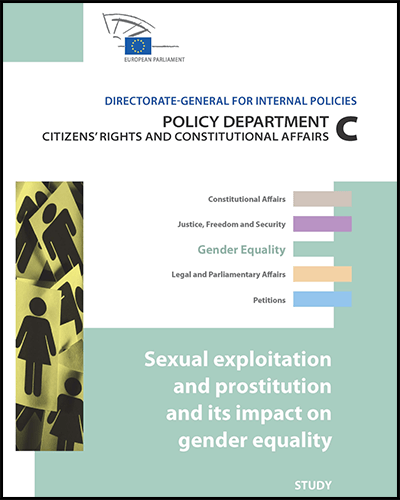
Sexual Exploitation and Prostitution and Its Impact on Gender Equality

Provides background information drawn from the international literature on sexual exploitation and prostitution and its impact on gender equality in relation to the report of the Women’s Rights and Gender Equality Committee. The study concentrates on the debate on whether prostitution could be voluntary or has rather to be regarded in any case as a violation of women’s human rights. It also presents an overview of the policies on prostitution in the Member States as well as four case studies: Germany, the Netherlands, Spain, and Sweden. Conclusions are presented with the view to enhance the debate.

READ THE REPORT

Never Work Alone: Trade Unions and NGOs Joining Forces to Combat Forced Labour and Trafficking in Europe

Guide for trade unions and other civil society organisations to jointly combat modern-day slavery and trafficking of workers. The report is the result of a two-year project in which trade unions and NGOs have looked into each other’s actions and approaches to combat slavery and labour trafficking. It examines different approaches and shows four major common grounds for action, each of them documented with a series of best practices.

READ THE REPORT

Compilation of Reports from the Conference on “When People are Treated as Commodities in the Global Market”

In October 2006, Anti-Slavery International ,CICA, IEPALA, MLAL Progetto Mondo and OIKOS participated in a two-day conference in Verona, Italy, as part of the “Hands Up for Freedom” project. Partners were invited from various countries and papers were presented on topics relating to the conference theme, “When People are treated as Commodities in the Global Market”. This report is a summary of some of the information made available during the conference in Verona.

READ THE REPORT