Recommendations for Fighting Human Trafficking in the United States and Abroad

2008 Transition Report for the Next Presidential Administration by The Action Group to End Human Trafficking and Modern-Day Slavery. The Action Group is comprised of: the Alliance to Stop Slavery and End Trafficking, Coalition to Abolish Slavery & Trafficking, Free the Slaves, International Justice Mission, Not For Sale Campaign, Polaris Project, Ricky Martin Foundation, Solidarity Center, and Vital Voices Global Partnership. The Action Group is a U.S.-based, non-partisan group of complementary organizations dedicated to abolishing modern-day slavery and human trafficking.

READ THE REPORT

A National Overview of Prostitution and Sex Trafficking Demand Reduction Efforts

Provides a descriptive overview of initiatives targeting the demand for commercial sex in the United States. It describes the process of gathering the information in this (and other) reports, discusses specific initiatives, and highlights selected communities to illustrate how and why their members have endeavored to address prostitution and sex trafficking by combating demand.

READ THE REPORT

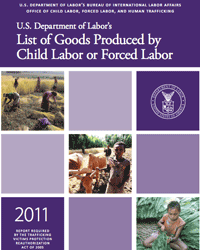
List of Goods Produced by Child Labor or Forced Labor, 2014

U.S. Department of Labor’s Bureau of International Labor Affairs, Office of Child Labor, Forced Labor, and Human Trafficking. Who picked the cotton for the shirt on your back? Who cut the cane for the sugar in your co ee? Who red the kiln to make the bricks in your replace? The List contained in these pages originates from a simple conviction: none of the products we consume on a daily basis should be made by an adult who is forced to produce them or a child under conditions that violate international law.

READ THE REPORT

New York Prevalence Study of Commercially Exploited Children – Final Report

The New York State Legislature required the New York State Office of Children and Family Services (OCFS) to develop a comprehensive study that: (1) estimates the prevalence of sexually exploited children within New York State, (2) identifies the unique needs of sexually exploited children, (3) specifies the types of programs and services that best meet such needs, and (4) evaluates the capacity of the current children’s service system to meet the needs of commercially sexually exploited children (CSEC).

READ THE REPORT