Becoming Hope: Stories, Reflections and Recommendations about Trafficking and Slavery Aftercare in the UK

Presents the stories of Kate, Amy and Natalie (not their real names). These survivors approached SHF for long-term aftercare support; in one way or another they had been let down by the system, and they wanted us to tell their stories. Demonstrates the challenges they have faced, the limitations of the National Referral Mechanism (NRM), and the insufficient support provided by many social and government services.

READ THE REPORT

Collateral Damage: The Impact of Anti-Trafficking Measures on Human Rights Around the World

Reviews the experience of eight specific countries and attempts to assess what the impact of anti-trafficking measures have been for a variety of people living and working there, or migrating into or out of these countries. The eight are: Australia, Bosnia and Herzegovina (BiH), Brazil, India, Nigeria, Thailand, the United Kingdom (UK) and the United States (US). The chapters look specifically at what the impact has been on people’s human rights.

READ THE REPORT

Compilation of Reports from the Conference on Trafficking of Human Beings and Migration: A Human Rights Approach

In March 2005, Anti-Slavery International and other non-governmental organisations including CICA, IEPALA, MLAL Progetto Mondo and OIKOS took part in a conference in Lisbon, Portugal. The issues of trafficking and migration in Italy, Portugal, Spain and the United Kingdom were discussed, including the current siutation, government action and recommendations for change. Global partners presented papers on topics relating to the conference’s theme. The report is a summary of information made available during the conference.

READ THE REPORT

Combating Trafficking in Persons: A Directory of Organisations

Information of activities and services offered by organisations around the world that are working towards the elimination of human trafficking. It aims to facilitate co-operation and the establishment of networks and partnerships, aid effective referral for trafficked people (psychological counselling, long-term shelter provision and skills training), assist personnel who have identified a victim of trafficking to make contact with relevant service providers and provide an overview of the trafficking situation in each country. Also provides background on legislation and the types of services provided by organisations and institutions in this area.

READ THE REPORT

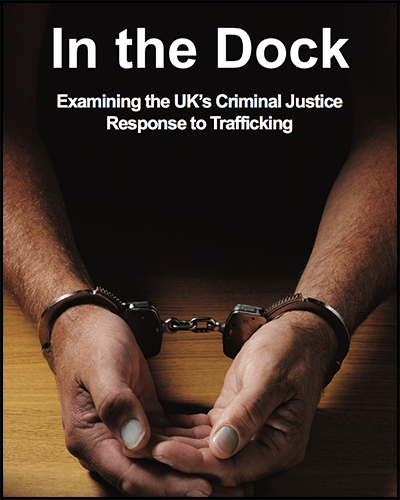
In the Dock: Examining the UK’s Criminal Justice Response to Trafficking

Examines the effectiveness of trafficking investigations and prosecutions through the UK Criminal Justice System (CJS)3 in terms of law, policy and practice. In particular, the report focuses on: Obstacles that impede an effective criminal justice response to trafficking; The UK’s ability to ensure its obligations to protect trafficked persons participating in criminal proceedings; Adherence to the requirement not to criminalise trafficked persons; and presenting examples of good practice from within the UK and abroad wherever possible.

READ THE REPORT

Evaluation of the Effectiveness of Measures for the Integration of Trafficked Persons

Five case countries (Belgium, France, Hungary, Italy and the United Kingdom) have been assessed for the purposes of this project, and it is also useful to enquire as to whether any of these countries offer specific examples of effective measures for the integration of victims. As the research for this project has benefitted from some interviews with victims of trafficking, we can also qualitatively address those measures which victims themselves consider satisfactory.

READ THE REPORT